Bosch Dishwasher E24 Error Code: Step-by-Step Fix
Required Tools for this Fix
- Sponge
- Rinse water
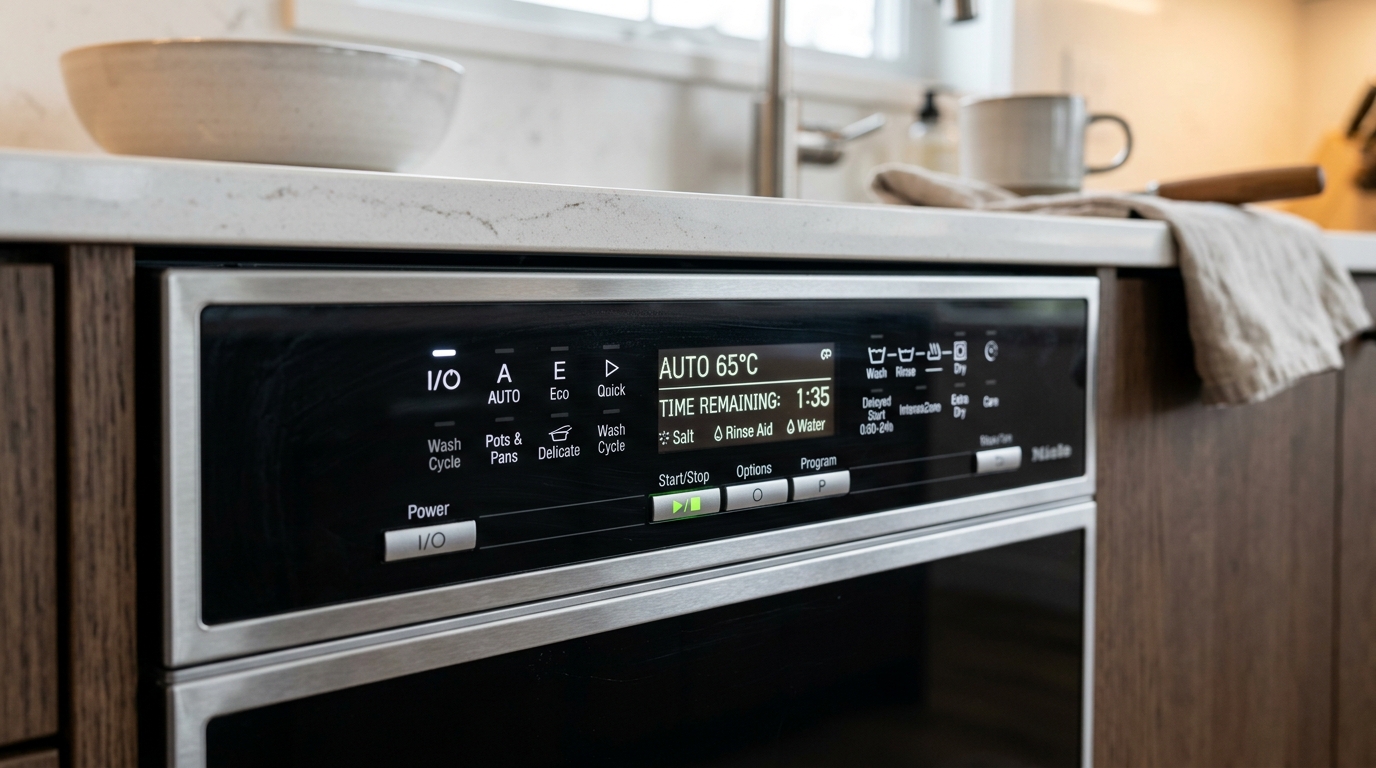
Your Bosch dishwasher is engineered to run quietly and efficiently, but a sudden E24 error code can bring your kitchen cleanup to a grinding halt. This specific error message indicates a draining fault, meaning your dishwasher’s control board has detected that water is not evacuating the tub within the designated time frame.
While this code can sometimes point to a failing pump, the absolute most common culprit is a heavily clogged drain filter. When food particles, grease, and debris accumulate in the filter assembly, they restrict water flow and trick the machine’s sensors.
We suggest tackling this repair yourself before you pick up the phone to call a professional. Most homeowners can resolve an E24 error in under thirty minutes with basic household tools.
Understanding the Bosch E24 Error Code
Bosch dishwashers utilize a highly sensitive drain system designed to protect your floors from flooding. During the first few minutes of any wash cycle, the dishwasher runs a brief drain cycle to clear out any residual water.
The control board monitors the electrical resistance on the drain pump motor during this startup phase. If the pump faces too much physical resistance, or if water remains in the sump basin because it cannot pass through a clogged filter, the controller triggers the E24 code.
A clogged filter restricts the pathway between the wash tub and the drain pump. When water cannot flow smoothly through the filter mesh, the pump runs dry or encounters air pockets, which changes its rotational speed and electrical draw.
The dishwasher interprets this fluctuation as a drainage system failure and halts the cycle immediately for safety. Cleaning your filter assembly is the first and most effective step to clear this code.
CRITICAL SAFETY WARNING: Always disconnect your Bosch dishwasher from its electrical power supply before attempting any diagnostic or repair work. You can unplug the unit from the wall outlet beneath your sink, or switch off the dedicated circuit breaker in your home’s main electrical panel. Never work on an appliance while it is connected to live electricity, and wear protective gloves to prevent cuts from hidden debris or broken glass in the sump.
DIY Diagnostic and Repair Overview
To help you plan your repair, we compiled a quick reference table outlining the steps, estimated times, necessary tools, and potential costs associated with fixing an E24 error code.
| Diagnostic Step | Est. Time | Tools Needed | Cost |
|---|---|---|---|
| 1. Access & Clean Drain Filter | 10 mins | None (Hand-turned) | $0 |
| 2. Clean the Sump Basin | 5 mins | Sponge, Old Toothbrush | $0 |
| 3. Inspect & Clear Impeller | 10 mins | Spoon or Torx T20 screwdriver | $0 |
| 4. Check Drain Hose & Connection | 15 mins | Pliers, Bucket, Screwdriver | $0 - $15 |
| 5. Test and Reset Unit | 5 mins | None | $0 |
Phase 1: Accessing and Cleaning the Drain Filter
The primary defense system against debris in your Bosch dishwasher is the multi-stage filter assembly located at the bottom of the tub. Over time, a microscopic film of grease and fine food silt can coat the fine mesh screen, rendering it virtually waterproof even if it looks clean at a glance.
Removing the Filter Assembly
Open your dishwasher door completely and slide the bottom dish rack all the way out. Locate the circular plastic filter cap at the bottom center of the stainless steel tub.
Rotate the filter cap counterclockwise one-quarter turn. You will feel a slight release click as the locking tabs disengage from the sump housing.
Gently lift the entire filter assembly straight up and out of the dishwasher. Water may drip from the filter, so keep a small towel or bowl nearby to catch any spills.
[Dishwasher Tub Floor]
       |
       v
 [Filter Cap] <--- Rotate 1/4 Turn Counterclockwise
       |
       v
 [Lifting Action] ---> Pull Straight Up
Disassembling the Filter Pieces
The Bosch filter assembly consists of three distinct parts that nest together. Pull the cylindrical micro-filter tube out from the flat, rectangular mesh screen.
Next, separate the coarse plastic inner basket from the fine outer metal mesh. Inspect all three components for tears, punctures, or signs of wear.
If any part of the mesh screen is torn, it will allow debris to pass directly into your drain pump, leading to recurring blockages. In this case, we recommend purchasing a replacement filter assembly immediately.
Deep Cleaning the Filter Components
Take the separated filter pieces to your kitchen sink. Run warm tap water through the inside of the filters to push debris outward.
Apply a few drops of liquid dish soap to a soft-bristled toothbrush or utility brush. Gently scrub the entire surface of the metal mesh and the plastic baskets to break up stubborn grease and calcium scale.
Pay close attention to the tiny pores in the fine outer mesh. Rinse all parts thoroughly under running water until the mesh is completely clear and water flows through it without pooling.
Phase 2: Inspecting and Clearing the Sump Basin
With the filter assembly removed, you now have direct access to the sump basin. This is the collection well where water pools before being pumped out of the machine.
Removing Standing Water
It is common to find several inches of dirty water sitting in the sump basin when an E24 error occurs. Use a large sponge, a turkey baster, or a small cup to bail the water out of the sump.
Transfer this water to a nearby bucket or sink until the bottom of the basin is completely dry. Removing this standing water allows you to clearly see the bottom of the sump and spot tiny obstructions.
Checking for Debris
Grab a bright flashlight and shine it directly into the empty sump cavity. Look for foreign objects that may have bypassed your filter during loading.
Common culprits include broken glass shards, plastic bread ties, fruit labels, toothpicks, and small bones. Use a pair of needle-nose pliers or your gloved fingers to carefully extract any debris you find.
Avoid sticking your bare fingers blindly into the sump. Broken glass is often invisible in water and can cause painful injuries.
Phase 3: Checking the Drain Pump Impeller
Even a perfectly clean filter cannot resolve an E24 error if the drain pump itself is jammed. Your Bosch dishwasher features a removable access cover that allows you to inspect the pump impeller without pulling the machine out from the cabinetry.
Removing the Pump Cover
Look at the left-hand side of the sump basin floor. You will see a small, curved plastic cover plate, which is often white or grey.
On some older Bosch models, this cover is secured by a single Torx T20 screw. On newer models, it is held in place by a plastic locking tab that you can release by pulling up on the tab with your finger or the handle of a metal spoon.
Insert the spoon handle under the curved edge of the cover. Gently pry upward and forward until the cover snaps free from the pump housing.
[Sump Basin Floor]
       |
       v
 [Pump Cover Latch] <--- Lift Upward with Spoon Handle
       |
       v
 [Impeller Chamber] <--- Exposes Rotating Blades
Inspecting the Impeller
With the cover removed, you can see the small, propeller-like blades of the drain pump impeller. Use your finger or a cotton swab to spin the impeller blades manually.
The impeller should rotate with a slight springy resistance, clicking in quarter-turn increments. If the impeller is completely locked or feels gritty when spun, check behind the blades for wound hair, threads, or food fibers.
Remove any blockages with a pair of tweezers. Spin the blades several times to ensure they rotate freely through a full 360-degree rotation.
Reinstalling the Pump Cover
This is a critical step that many homeowners miss. The drain pump cannot create a proper vacuum to pull water out of the tub if the pump cover is loose or missing.
Align the pump cover tabs with the matching slots in the pump housing. Press down firmly on the cover until you hear a loud, positive snap.
If your model uses a screw, tighten it securely but do not overtighten and strip the plastic threads. Replace the clean, reassembled filter assembly into the sump and twist it clockwise to lock it back into place.
Phase 4: Checking the External Drain Connections
If your filter and pump impeller are spotless and spinning freely, the E24 error code may be caused by a blockage further down the drain line. The drain hose connects the bottom of your dishwasher to your household plumbing under the sink.
Inspecting the Under-Sink Connections
Open the cabinet doors beneath your kitchen sink. Locate the corrugated plastic drain hose coming from your dishwasher.
Trace the hose from the cabinet wall to where it connects to either your garbage disposal or your sink drain tailpiece. Look for any sharp bends, kinks, or heavy objects leaning against the hose that could pinch off the water flow.
If the hose is kinked, gently straighten it out. You can secure it in a gentle, sweeping curve using zip ties to prevent future kinks.
Checking the Garbage Disposal Knockout Plug
If you recently installed a new garbage disposal, this is the most likely cause of your E24 error code. New disposals come with a solid plastic knockout plug inside the drain port where the dishwasher hose connects.
If this plug was not removed during installation, water cannot exit the dishwasher. To check this, loosen the hose clamp securing the dishwasher drain hose to the disposal port.
Pull the hose off the port and look inside the metal tube on the disposal. If you see a solid plastic wall blocking the tube, use a screwdriver and hammer to punch it out, then retrieve the plastic piece from inside the disposal chamber.
 [Dishwasher Drain Hose]
          |
          v
  [Hose Clamp Connection]
          |
          v
 [Garbage Disposal Port] <--- Check for Solid Knockout Plug
Clearing Hose Clogs
If you do not have a new disposal, a clog may have formed inside the hose itself. Place a shallow bucket under the drain hose connection beneath the sink.
Carefully disconnect the hose from the disposal or drain pipe. Direct the open end of the hose into the bucket.
Have a helper pour a quart of warm water directly into the bottom of the dishwasher tub. If the water does not flow out of the disconnected hose by gravity, you have a blockage inside the hose.
You can clear light clogs by squeezing the hose along its length to break up debris, or by using a flexible plumbing snake to pull out grease plugs.
Step-by-Step Diagnostic Testing Checklist
Use this quick checklist to systematically isolate the cause of your E24 code. Check off each step as you complete it to ensure you do not skip any vital component.
- Power Disconnected: Verify that the dishwasher is unplugged or the circuit breaker is switched off.
- Filter Removed: Twist the filter cap counterclockwise and pull the assembly out.
- Filter Inspected & Cleaned: Disassemble the three filter layers and scrub them clean with warm, soapy water.
- Sump Checked for Water: Sponge out all standing water from the bottom of the tub.
- Sump Basin Searched: Scan the basin with a flashlight and remove any glass, seeds, or debris.
- Pump Cover Removed: Snap off the curved plastic cover to access the impeller.
- Impeller Spins Freely: Confirm the pump blades rotate manually without binding.
- Pump Cover Resnapped: Press the cover back down until you hear a distinct click.
- Hose Inspected Under Sink: Check for kinks, twists, or heavy objects pinching the line.
- Disposal Plug Removed: Verify the garbage disposal knockout plug is not blocking the drain port.
- Hose Cleared of Clogs: Blow through the hose or snake it if water does not flow freely.
Preventing Future E24 Error Codes
Once you clear the E24 error, you want to make sure it does not return. Proper preventative maintenance will keep your dishwasher running smoothly for years to come.
Scraping Dishes Properly
Avoid overloading your dishwasher with large food scraps. You do not need to pre-rinse your dishes completely, but you should scrape off large bones, seeds, pasta, and thick sauces into the trash.
These large solids are too big for the micro-filter to process easily and will quickly clog the sump.
Running Regular Cleaning Cycles
Once a month, we suggest running a hot empty cycle with a specialized dishwasher cleaner or a bowl of white vinegar. Place a cup of vinegar on the top rack of an empty dishwasher and run a heavy-duty cycle on the hottest setting.
This helps dissolve grease buildup and calcium deposits that accumulate inside the internal hoses and on the fine mesh of your filter.
Frequently Asked Questions
Why does my Bosch dishwasher start running for a minute and then show E24?
This happens because the dishwasher always starts its cycle with a drain test. The machine attempts to pump out any residual water to ensure a clean start. If the control board detects resistance on the pump impeller or senses that the water level has not dropped within that first minute, it halts the wash cycle and displays the E24 code.
Can I run my dishwasher without the drain filter?
No, you should never run your dishwasher without the filter assembly installed. The filter is designed to protect the drain pump and the internal spray arm nozzles from debris. Running the unit without the filter will allow large food particles and hard objects to enter the pump chamber, which can permanently damage the impeller or burn out the pump motor.
My filter is clean, but the E24 code still won’t go away. What should I check next?
If the filter is spotless, the most likely culprit is an improperly seated drain pump cover. If that plastic cover is not fully snapped into place, the pump cannot create the suction needed to push water through the hose. Double-check that you pressed the cover down until it clicked loudly, then verify that your drain hose under the sink is not kinked or clogged.
How often should I clean my Bosch dishwasher filter?
For a typical household that uses the dishwasher daily, we suggest cleaning the filter assembly once a month. If you rarely scrape your plates before loading them, you may need to clean it every two weeks. Regular cleaning prevents grease buildup from choking the fine mesh screen.
Do I need to replace my drain pump if I get an E24 error?
In most cases, you do not need to replace the drain pump. The E24 error code is almost always caused by a physical blockage in the filter, sump, or drain hose rather than a electrical failure of the motor itself. If you have thoroughly cleared all blockages and the impeller still refuses to spin when the machine has power, then you may need to test the pump motor for electrical continuity with a multimeter.
Safety Precaution Notice
Before proceeding with any repair checklist: Always unplug the appliance from its electrical socket and turn off shutoff valves for incoming water (for washers and dishwashers). Discharge capacitors if working on motors.