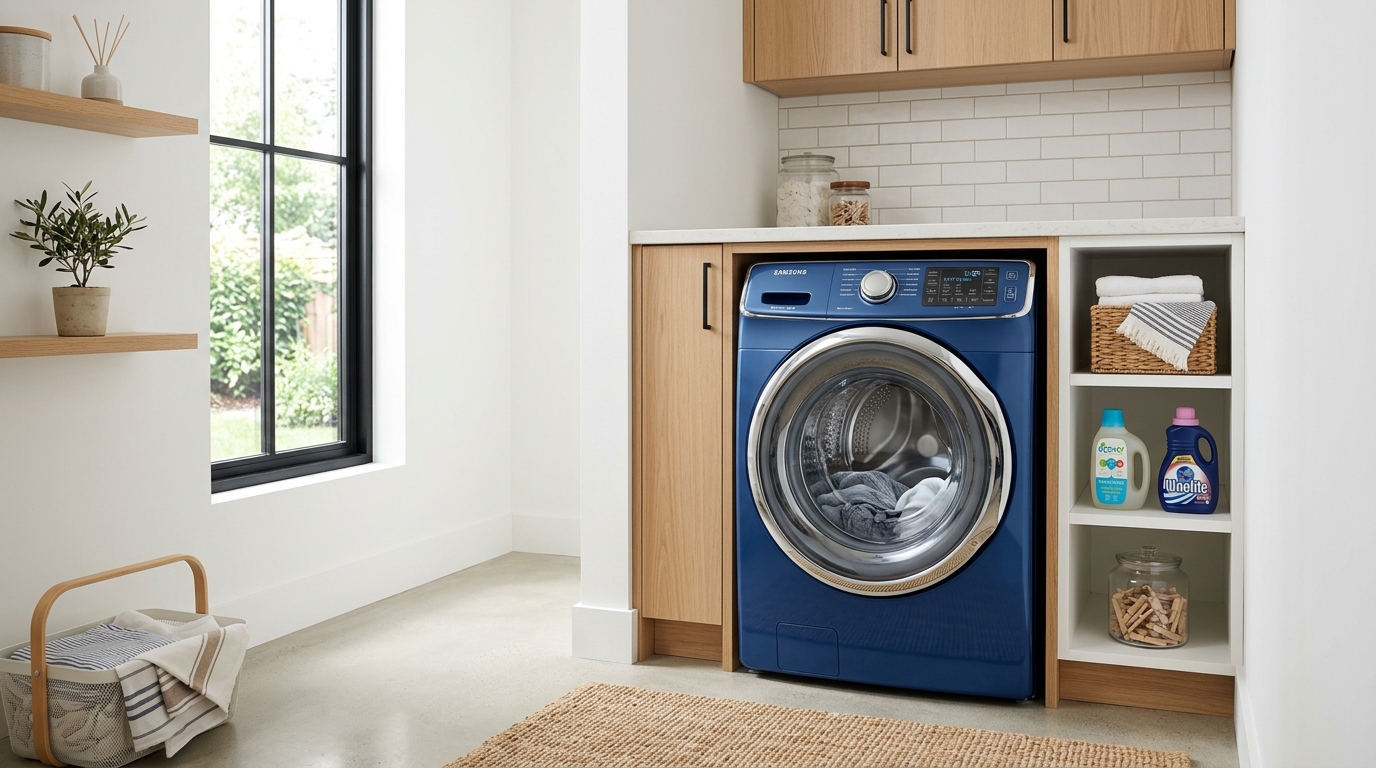
Samsung Washing Machine 5C Error Code: Step-by-Step Fix
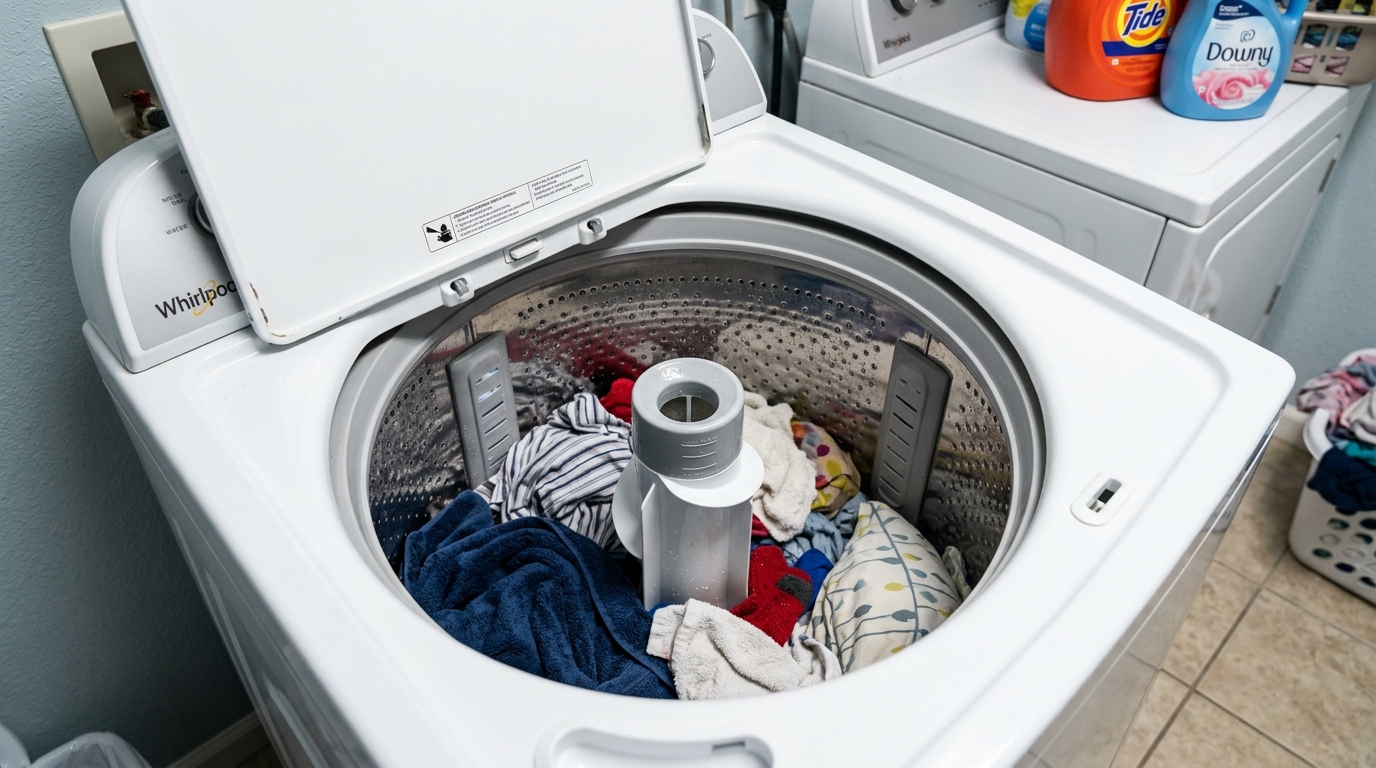
Required Tools for this Fix
- Flathead screwdriver
- Shallow pan
- Towel
Quick Summary Answer: The Samsung washer error code 5C indicates a drain failure, meaning the machine cannot expel water within the factory-allotted time limit (typically 10 to 15 minutes). The most common cause is a clogged debris filter (coin trap) or an obstructed drain hose. To fix it quickly, manually drain the machine via the emergency drain tube, remove and rinse the debris filter, and verify the drain hose has no kinks or foreign blockages.
A washer full of standing, soapy water and an unwashed load of laundry is a major household disruption. When your Samsung washing machine halts mid-cycle and flashes the 5C error code, it has attempted to drain water from the tub and timed out.
On older digital LED screens, this code often looks identical to SC because of the segment layout. In earlier model generations, Samsung used 5E or SE to designate the exact same drainage malfunction. Regardless of which version appears on your panel, the machine is sending a clear message: water is trapped in the drum.
We see this specific service call constantly. Fortunately, roughly 85% of 5C errors do not require replacing parts. With basic household tools and methodical troubleshooting, you can get your machine running again without waiting days for a paid technician.
Safety Warning: Always disconnect your washing machine from the electrical outlet before removing access panels or touching internal components. Water and high-voltage electricity create an extreme shock hazard. Shut off the hot and cold water supply valves behind the washer before beginning diagnostic teardowns.
5C Error Diagnostic Overview
Before you pull out your tool kit, review the required time, tools, and repair expenses associated with each diagnostic stage.
| Diagnostic Step | Est. Time | Tools Needed | Est. DIY Cost |
|---|---|---|---|
| 1. Manual Drain & Filter Clean | 15–20 mins | Shallow pan, towels, bucket | $0 |
| 2. Drain Hose & Standpipe Check | 10–15 mins | Pliers, flashlight, bucket | $0 |
| 3. Impeller Inspection | 10 mins | Flashlight, needle-nose pliers | $0 |
| 4. Drain Pump Motor Electrical Test | 30–45 mins | Phillips screwdriver, digital multimeter | $0–$15 |
| 5. Drain Pump Replacement | 45–60 mins | Screwdrivers, 10mm socket, pliers | $35–$85 |
| 6. Pressure Switch & Air Tube Check | 30 mins | Screwdriver, wire coat hanger or zip tie | $0–$30 |
Understanding Why the 5C Error Triggers
Modern Samsung front-load and top-load washers monitor water evacuation using a pressure sensor connected to the main control board. When the wash cycle reaches a drain phase, the control board activates the drain pump motor.
If the water level sensor does not register an empty drum within a set window, the control unit cuts power to the motor and triggers the 5C code. This design protects the drive motor and internal electronics from running with heavy standing loads. It also prevents the drain pump from overheating while dry-cycling or running jammed.
The breakdown usually traces back to four mechanical and electrical root causes:
- A physical blockage inside the pump’s debris filter basket.
- A kinked, frozen, or pinched external drain line.
- Foreign debris wrapped around the drain pump impeller blades.
- Complete electrical or mechanical failure of the drain pump motor assembly.
Phase 1: Emergency Manual Drain and Filter Cleaning
The debris filter—often called the coin trap—catches hair, coins, pet fur, and rogue socks before they reach the pump motor. When this trap fills completely, water cannot flow out of the tub.
1. Prepare the Workspace
Water will spill onto your floor during this process. Lay down two or three thick bath towels beneath the bottom front panel of your front-load washer. Keep a shallow baking pan or rimmed tray right against the machine base.
2. Open the Filter Access Door
On front-load machines, find the small access hatch on the bottom-right or bottom-left corner of the front cabinet. Press the tab or use a flat-head screwdriver wrapped in tape to pop the door open. Top-load washers rarely have this front hatch; their pumps sit directly beneath the tub assembly.
3. Drain via the Emergency Drain Tube
Next to the round filter cap, you will see a small, flexible black or white rubber tube with a plug at the end. Pull the tube out of its mounting clip carefully.
Position your shallow dish underneath the tube and pull the plug out. Allow the water to fill the dish, replace the plug, dump the water into a utility bucket, and repeat. Continue this process until water stops flowing entirely.
[Washer Front Base]
┌─────────────────────────┐
│ [Filter Cap]  [Tube]◄───┼── Pull tube, remove plug,
│    (O)         [==]     │   drain into shallow pan first.
└─────────────────────────┘
4. Remove and Clean the Main Debris Filter
With the water emptied, turn the large round filter knob counterclockwise. You may need to apply firm force if sediment or mineral scale has seized the threads.
Pull the filter assembly straight out. Clean away any buildup, lint mats, coins, hairpins, and slime under warm running water using an old toothbrush.
Look directly inside the empty filter housing with a flashlight. Clear out any debris trapped in the rear throat leading toward the pump impeller. Reinsert the filter, turn it clockwise until fully hand-tight, and push the emergency tube back into its retention clip.
Phase 2: Inspecting the Drain Hose and Standpipe
If the filter was clean but the machine will not drain, the restriction likely sits downstream in the discharge plumbing. Modern washers pump water out with significant force, but simple physical obstructions easily defeat them.
Checking for Mechanical Kinks
Slide the washing machine away from the wall to inspect the corrugated plastic drain hose. Ensure the line did not get crushed or pinched against the wall during spin-cycle vibrations. A sharp 90-degree kink cuts water output by more than 80%, triggering a 5C fault code.
WRONG:                         CORRECT:
┌──────┐                       ┌──────┐
│Washer│                       │Washer│
│  [==]───┐ PINCHED!           │  [==]───╮  Smooth arch
└──────┘  │                    └──────┘  │
       ===╪===                        │  │
          │ Standpipe                 └──┼──┐
                                         │  │ Standpipe
Checking Standpipe Height and Insertion Depth
Drain hose routing must follow strict specifications to prevent siphoning and backpressure issues.
- The top of your home standpipe must sit between 39 inches and 96 inches from the floor.
- The drain hose should not extend more than 6 to 8 inches down inside the standpipe.
- Never tape or seal the drain hose airtight into the standpipe; the gap provides a siphon break.
If the hose sits too far down in the pipe, dirty household water can siphon back into the washer tub. This triggers an intermittent 5C code because the washer senses water returning when it should be dry.
Clearing Drain Hose Clogs
Disconnect the drain hose from the rear of the machine using slip-joint pliers on the retaining spring clamp. Direct the hose into a utility sink or large bucket.
Run a plumber’s drain snake or high-pressure water from a garden hose through the line to dislodge compacted detergent buildup or lint plugs. Inspect the plastic drain port on the back of the washer for stuck clothing fibers before reconnecting.
Phase 3: Testing the Drain Pump Motor
If the filter and drain lines are completely clear, the drain pump itself has likely failed. The pump uses an electric motor driving a small plastic impeller to force water through the lines.
Physical Impeller Inspection
Remove the debris filter cap again and look into the back of the chamber with a bright flashlight. You will see a small plastic fan blade (the impeller).
Use your finger or a long wooden dowel to spin the impeller blades. The impeller should not spin completely loose like a pinwheel; it should snap through quarter-turn rotations due to the permanent magnets inside.
If the impeller refuses to move, something is wedged behind the housing. We frequently extract bra underwires, small screws, and toothpicks that slip past the filter mesh and seize the blades.
Normal Impeller Feel:
Quarter Turn ──> Magnetic Resistance ──> Snap! (Next quarter turn)

Failed Impeller Feel:
Completely seized OR Spins freely without magnetic stops (Broken internal shaft)
Listening to the Pump Under Power
Plug the unit back in, select a “Spin Only” or “Drain” cycle, and press Start. Listen intently down near the lower pump housing.
- Loud Humming/Buzzing: Power reaches the motor, but the impeller is jammed mechanically or the motor bearings have seized.
- Rattling/Grinding: The motor impeller has sheared off its internal drive shaft, or plastic debris is hitting the spinning fins.
- Dead Silence: No electrical power reaches the pump, the motor windings are burned out, or the main control board relay has failed.
Testing Motor Windings with a Multimeter
Unplug the washer. Depending on your model, access the pump through the lower front panel, rear service panel, or by tipping a top-load washer backward.
- Disconnect the two electrical spade connectors from the drain pump terminals.
- Set your digital multimeter to the lowest Resistance (Ohms / $\Omega$) setting.
- Place one test probe on each terminal of the pump motor.
- Read the resistance display:
[ Multimeter Reading: ~10 to 25 Ohms ]  --->  Normal electrical coil resistance.
[ Multimeter Reading: "0.00" / Zero ]   --->  Shorted motor coil. Replace pump.
[ Multimeter Reading: "O.L." / Infinite]--->  Open circuit / Burned coil. Replace pump.
If the resistance falls outside the normal operating range (typically 10 to 25 Ohms for most Samsung models), the motor coil has failed. The entire pump motor assembly must be replaced.
Phase 4: Pressure Switch and Air Tube Diagnostics
Occasionally, a washer drains all water successfully, yet the 5C code still appears on the display. This points directly to the water level pressure switch (analog sensor).
The machine calculates water volume using atmospheric air pressure. As water fills the drum, it pushes air up a thin clear plastic hose running to a pressure transducer at the top of the cabinet.
┌─────────────────────────────────┐
│ Main Control Board              │
└──────────────┬──────────────────┘
               │ Signal
┌──────────────▼──────────────────┐
│ Water Level Pressure Switch     │
└──────────────┬──────────────────┘
               │ Thin Air Hose
               │ (Trapped air rises)
               ▼
┌─────────────────────────────────┐
│ Tub Assembly / Air Dome Chamber │ ◄── Soap scum clogs here!
└─────────────────────────────────┘
If this plastic tube develops lint buildup, dried soap foam, or a tiny pinhole leak, the sensor cannot detect that the tub has emptied. The pump will run until it hits the system safety timeout, immediately throwing a 5C error code.
Inspecting the Pressure System:
- Unplug the washer and remove the top panel screws.
- Slide the top cover off to locate the small, dome-shaped sensor mounted to the upper side rail.
- Detach the clear plastic hose from the nipple on the sensor.
- Blow firmly down into the tube. You should hear bubbling or air flowing into the lower tub without resistance.
- If you feel resistance, clean the tube with warm water and inspect the lower air dome connector for hardened detergent residue.
- Reconnect the tube firmly, ensuring an airtight seal on both connection ports.
Step-by-Step Diagnostic Checklist
Run through this field checklist in sequence to eliminate the 5C error code systematically:
[ ] 1. Power down the machine and isolate the electrical supply.
[ ] 2. Spread towels and stage a collection tray under the access panel.
[ ] 3. Pull the emergency drain tube and empty all drum water.
[ ] 4. Remove the coin trap filter; clear lint, hair, and foreign objects.
[ ] 5. Shine a light into the pump chamber; confirm the impeller spins with magnetic resistance.
[ ] 6. Inspect the rear discharge hose for kinks, crimps, or freezing.
[ ] 7. Confirm the standpipe depth sits between 6 and 8 inches.
[ ] 8. Check pump motor terminals with a multimeter for 10-25 Ohms of resistance.
[ ] 9. Clear the pressure sensor tube of detergent blockages and check for air leaks.
[ ] 10. Reassemble, plug the washer in, and run an empty "Rinse & Spin" test cycle.
Preventative Maintenance to Avoid Future Drain Failures
Once your machine drains normally, put simple operational habits into place to prevent the 5C error from returning.
- Check Garment Pockets: Coins, paper clips, hair ties, and golf tees cause the vast majority of pump failures. Empty all pockets completely before dropping items into the wash basket.
- Use Garment Bags for Small Items: Baby socks, thongs, and small cleaning rags easily slip between the door boot gasket and spin basket on front-load models. Always place these small pieces in mesh laundry bags.
- Stop Using Excess Detergent: Oversudsing is a hidden trigger for drainage issues. Modern high-efficiency (HE) washers require only two tablespoons of liquid HE detergent per normal load. Excess soap creates thick suds that pump impellers cannot push, mimicking a physical clog.
- Perform Monthly Filter Flushes: Clean out the lower debris filter on the first day of every month. Regular maintenance takes five minutes and keeps sediment from baking onto the pump components.
Frequently Asked Questions
Is error code 5C the same as SC or 5E on my Samsung washer?
Yes. On older segmented LED display panels, the number “5” and the letter “S” look identical, making 5C read as SC. Similarly, older Samsung washing machine platforms used the designator 5E or SE to signal this exact drain timeout issue. The diagnostic path and mechanical fixes are identical across all these error variations.
Can I run a cycle if my washer displays 5C and clears after a simple power reset?
We advise against running a normal wash load immediately after an error reset. While power cycling clears the code from the display screen, it does not fix the physical restriction that triggered the safety alert. If the tub fills with water again, the machine will likely freeze mid-cycle, leaving you with another tub of trapped, soapy laundry.
How much does professional drain pump replacement cost?
If you hire a licensed appliance repair technician to replace a failed drain pump, expect to pay between $175 and $350 total. This cost typically includes an $80 to $120 diagnostic service call, $40 to $90 for the OEM Samsung pump, and 30 to 60 minutes of labor. If you buy the OEM replacement pump and install it yourself, the out-of-pocket cost is typically under $60.
Why does my washer make a humming noise when the 5C code appears?
A low humming or buzzing noise indicates that the control board is delivering electricity to the pump, but the pump motor cannot turn. This happens when a coin, hairpin, or scrap of fabric binds the impeller tightly. It can also point to motor bearings that have seized from water intrusion past a degraded internal shaft seal.
Will too much detergent trigger a 5C error code?
Yes, excessive detergent creates an air-locked condition inside the pump housing. The drain pump impeller is designed to push liquid, not foam. When the drum fills with thick soap suds, the impeller spins in an air cavity without generating discharge pressure, causing the control board to assume the drain path is blocked.
Safety Precaution Notice
Before proceeding with any repair checklist: Always unplug the appliance from its electrical socket and turn off shutoff valves for incoming water (for washers and dishwashers). Discharge capacitors if working on motors.